

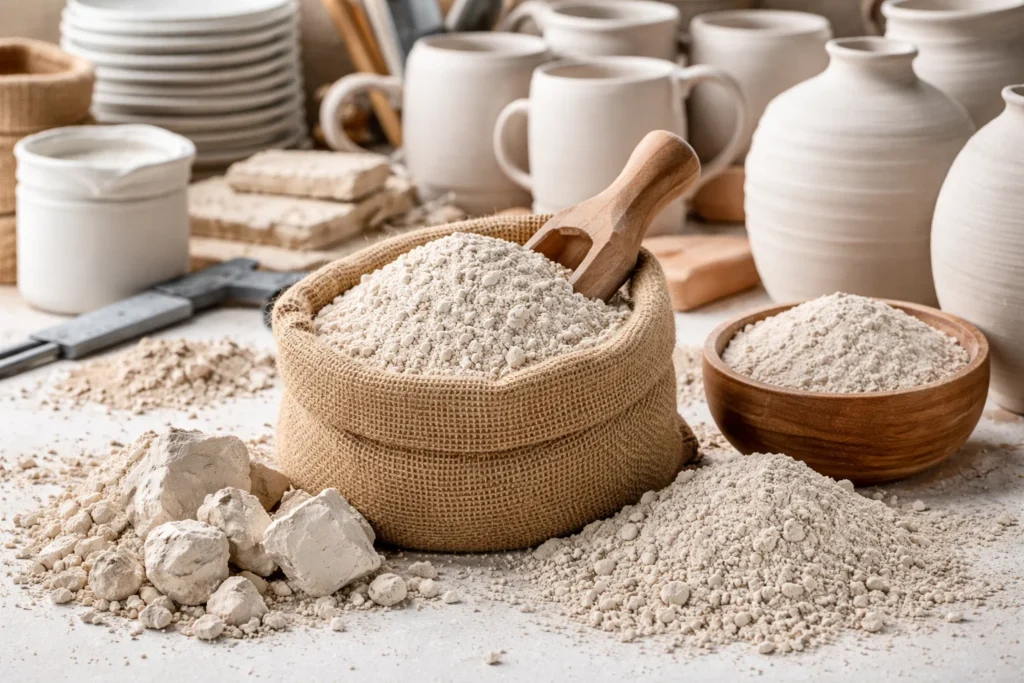
Ball clay is an important industrial clay mineral widely used in manufacturing processes that require high plasticity, strong binding properties, and fine particle size. Because of these characteristics, ball clay plays a crucial role in improving the quality and performance of many industrial materials.
Manufacturers prefer ball clay because it enhances workability during shaping processes while maintaining strength during drying and firing. These qualities make it particularly useful in ceramic production and other material processing industries.
Due to its versatility and performance advantages, ball clay is used in several industrial sectors that rely on clay minerals for consistent manufacturing results.
This article explains the major uses of ball clay in industrial applications and why it remains a valuable raw material for modern manufacturing.
What Makes Ball Clay Suitable for Industrial Use
Ball clay is a fine-grained sedimentary clay mainly composed of kaolinite along with small amounts of quartz and mica. Its mineral composition provides properties that are highly beneficial in industrial manufacturing.
Important characteristics of ball clay include:
• High plasticity that allows easy shaping of materials
• Fine particle size distribution for uniform mixing
• Strong binding ability with other minerals
• Good strength during drying processes
• Smooth surface finish in final products
Because of these properties, ball clay is commonly combined with other minerals in industrial formulations.
Major Uses of Ball Clay in Manufacturing Industries
Ball clay is widely used in industries that require materials with strong forming characteristics and consistent performance.
Ceramic Body Formulation
One of the primary uses of ball clay is in ceramic body formulations. Manufacturers add ball clay to ceramic mixtures to improve plasticity and workability during shaping.
Ball clay helps manufacturers produce ceramic products with improved strength and smooth surfaces. It also supports stable shaping processes during molding and extrusion.
Sanitaryware Production
Ball clay is commonly used in the production of sanitaryware products such as sinks, basins, and toilet fixtures.
In this application, ball clay improves molding performance and provides better strength during drying stages. This helps manufacturers create sanitaryware products with precise shapes and high structural stability.
Ceramic Tile Manufacturing
Another major use of ball clay is in ceramic wall and floor tile production.
Ball clay improves the workability of ceramic mixtures and helps maintain shape stability during tile forming processes. It also contributes to better surface quality in finished tiles.
These characteristics make ball clay a valuable raw material for tile manufacturers.
Porcelain and Tableware Manufacturing
Ball clay is widely used in the production of porcelain and ceramic tableware.
Manufacturers use ball clay to improve forming characteristics when producing items such as plates, cups, bowls, and decorative ceramic products. The mineral helps achieve smoother surfaces and better structural integrity in finished products.
Industrial Ceramic Products
Ball clay is also used in certain industrial ceramic applications where materials must maintain strength during forming and firing processes.
In these applications, ball clay contributes to better bonding between mineral particles and supports stable shaping of ceramic components used in industrial environments.
Why Manufacturers Use Ball Clay in Production
Ball clay provides several functional advantages in industrial material formulations.
Key reasons manufacturers use ball clay include:
• Improved shaping and molding performance
• Strong binding with other mineral materials
• Better mechanical strength during processing
• Enhanced surface finish of final products
• Reliable performance in ceramic formulations
Because of these advantages, ball clay remains an important raw material for many manufacturing industries.
Conclusion
Ball clay is a versatile industrial clay mineral used in several manufacturing sectors. Its high plasticity, fine particle structure, and strong binding ability make it particularly valuable in ceramic production and related industries.
Manufacturers rely on ball clay to improve workability during shaping, enhance structural strength during drying, and achieve smooth surface finishes in final products. As global demand for ceramic materials continues to grow, ball clay will remain an essential component in modern industrial manufacturing.
Frequently Asked Questions
- What are the main uses of ball clay
- Ball clay is mainly used in ceramic body formulations, sanitaryware production, tile manufacturing, porcelain products, and industrial ceramics.
- Why is ball clay important in ceramic production
- Ball clay improves plasticity and shaping performance, allowing manufacturers to produce ceramic products with better strength and surface quality.
- Which industries commonly use ball clay
- Industries such as ceramics manufacturing, sanitaryware production, tile manufacturing, and industrial ceramics rely heavily on ball clay.
- What properties make ball clay suitable for industrial applications
- High plasticity, fine particle size, and strong binding properties make ball clay suitable for many industrial manufacturing processes.