

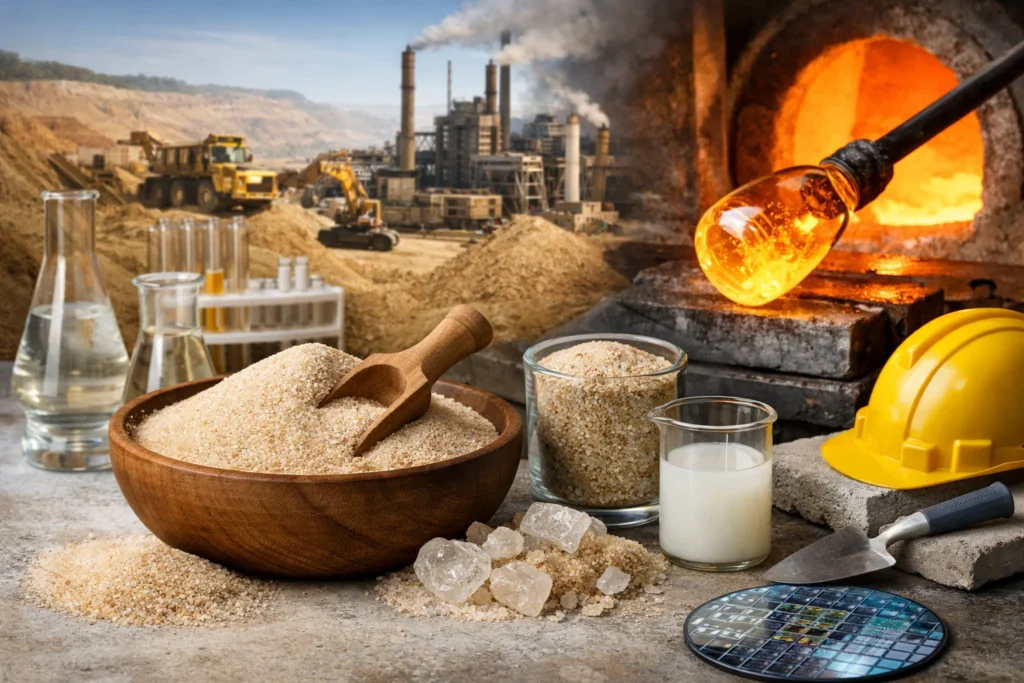
Silica sand is one of the most widely used industrial minerals in the world. It plays a critical role in multiple industries due to its purity, hardness, chemical stability, and heat resistance. From construction and manufacturing to electronics and consumer products, silica sand is a core raw material that supports modern infrastructure and industrial growth.
Understanding the uses of silica sand helps buyers, manufacturers, and exporters choose the right grade and application for their specific needs. This article explores the major industrial, commercial, and specialized applications of silica sand across global markets.
What Makes Silica Sand Valuable
Silica sand is primarily composed of silicon dioxide and is known for its high melting point, durability, and resistance to chemical reactions. These characteristics make it suitable for applications that require strength, precision, and thermal stability.
Different industries use silica sand in different grades and forms, depending on grain size, purity, and performance requirements. Its versatility is what makes it one of the most demanded minerals worldwide.
Uses of Silica Sand in Construction Industry
One of the largest uses of silica sand is in the construction sector. It is a key ingredient in concrete, cement, and mortar. Silica sand improves strength, durability, and structural integrity.
It is also used in flooring compounds, roofing materials, and road construction. In infrastructure projects, silica sand helps create stable and long-lasting foundations.
Uses of Silica Sand in Glass Manufacturing
Glass production is one of the most important applications of silica sand. High-purity silica sand is used to manufacture flat glass, container glass, fiberglass, and specialty glass.
Silica sand provides transparency, strength, and thermal resistance to glass products. The electronics, automotive, and packaging industries rely heavily on silica-based glass materials.
Uses of Silica Sand in Foundry and Metal Casting
In the foundry industry, silica sand is used to create molds and cores for metal casting. Its ability to withstand high temperatures without breaking down makes it ideal for casting iron, steel, and non-ferrous metals.
Silica sand ensures accurate mold shapes, smooth surface finishes, and consistent casting quality.
Uses of Silica Sand in Ceramics and Refractories
Silica sand is widely used in ceramic manufacturing. It improves shape retention, thermal stability, and strength during firing. Ceramic tiles, sanitary ware, tableware, and porcelain products all depend on silica sand as a key raw material.
In refractory applications, silica sand is used to manufacture heat-resistant bricks and linings for furnaces and kilns.
Uses of Silica Sand in Water Filtration
Silica sand is commonly used as a filtration medium in water treatment plants, swimming pools, and industrial water systems. Its uniform grain size allows effective removal of suspended particles and impurities.
Water filtration grade silica sand is valued for its durability, non-reactive nature, and long service life.
Uses of Silica Sand in Oil and Gas Industry
In the oil and gas sector, silica sand is used as a proppant in hydraulic fracturing. It helps keep fractures open in rock formations, allowing oil and gas to flow more freely.
High-strength and well-rounded silica sand is essential for this application due to extreme pressure and temperature conditions.
Uses of Silica Sand in Paints, Coatings, and Chemicals
Silica sand is used as a filler and functional additive in paints, coatings, and chemical formulations. It improves thickness control, abrasion resistance, and surface durability.
In chemical processing, silica sand acts as a raw material for producing silicates and other silicon-based compounds.
Uses of Silica Sand in Electronics and Technology
High-purity silica sand is used in the production of semiconductors, silicon wafers, and electronic components. It is a critical material for solar panels, computer chips, and advanced electronic devices.
The electronics industry requires extremely low impurity silica sand to meet performance and reliability standards.
Uses of Silica Sand in Sports and Recreation
Silica sand is used in sports fields, golf courses, playgrounds, and artificial turf systems. It improves drainage, stability, and surface performance.
In recreational applications, silica sand ensures safety, durability, and consistent playing conditions.
Uses of Silica Sand in Agriculture
In agriculture, silica sand is used for soil conditioning, turf management, and hydroponic systems. It improves drainage and root aeration, supporting healthy plant growth.
It is also used in poultry grit and animal feed supplements in controlled quantities.
Conclusion
The uses of silica sand span across nearly every major industry worldwide. Its strength, purity, and adaptability make it an essential mineral for construction, glass manufacturing, foundries, ceramics, filtration, oil and gas, electronics, and more.
For buyers and industry professionals, selecting the right type and grade of silica sand is crucial to achieving consistent quality and performance. With growing industrial demand, silica sand continues to be a key driver of global manufacturing and infrastructure development.
FAQ’s
Q1: What are the main uses of silica sand?
A1: Silica sand is used in construction, glass manufacturing, foundries, ceramics, water filtration, oil and gas, electronics, and agriculture.
Q2: Why is silica sand important in glass production
A2: Silica sand provides strength, transparency, and heat resistance, making it essential for manufacturing different types of glass.
Q3: Is silica sand used in water treatment?
A3: Yes, silica sand is widely used as a filtration medium to remove impurities from water.
Q4: What industries use high-purity silica sand
A4: Glass, electronics, solar panel, and semiconductor industries require high-purity silica sand.
Q5: Can silica sand be used globally
A5: Yes, silica sand is traded and used worldwide across multiple industrial and commercial sectors.