
The manufacturing sector in the Philippines continues to expand across construction, ceramics, glass production, paints, foundry operations, and infrastructure development. As industrial output grows, manufacturers require consistent access to high-quality industrial minerals to maintain efficiency, ensure product durability, and meet international quality standards.
Selecting the right industrial minerals supplier for Philippines operations is not just a procurement activity. It is a long-term strategic decision that directly affects production stability, cost management, and overall competitiveness. This guide explains how manufacturers can evaluate suppliers and build reliable bulk sourcing partnerships.
Growing Demand for Industrial Minerals in the Philippines
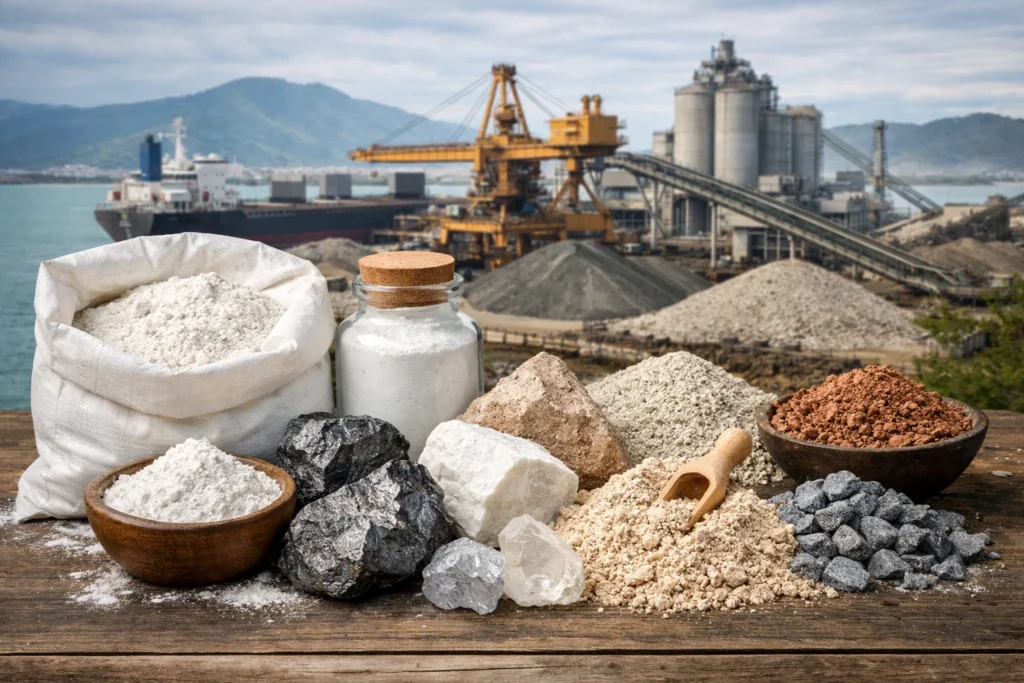
Industrial development in the Philippines has significantly increased demand for essential raw materials such as silica sand, feldspar, kaolin clay, bentonite clay, and ball clay. These minerals are widely used in:
- Ceramic and tile manufacturing
- Glass production
- Construction materials
- Paints and coatings
- Foundry and casting
- Rubber and plastics
As domestic manufacturing scales up, many companies rely on international exporters to ensure consistent quality, scalable volume, and long-term supply stability.
Why Choosing the Right Supplier Matters
Industrial minerals directly influence final product quality. Variations in chemical composition, particle size distribution, or moisture levels can lead to:
- Inconsistent product strength
- Surface finish defects
- Higher rejection rates
- Equipment inefficiencies
- Increased production costs
A structured and reliable supplier maintains consistent processing standards and ensures uniform material specifications across shipments.
Key Industrial Minerals Used by Philippine Manufacturers
Silica Sand
Silica sand plays a crucial role in glass manufacturing, construction applications, and paint formulations. High purity and controlled grading are essential for consistent melting behavior and product clarity.
Feldspar
Feldspar functions as a fluxing agent in ceramic and glass production. It lowers melting temperatures and improves mechanical strength in finished products.
Kaolin Clay
Kaolin clay enhances plasticity in ceramic bodies and improves brightness and smoothness in paper and coating applications.
Bentonite Clay
Bentonite is widely used in drilling fluids, foundry molds, and sealing systems due to its strong binding and swelling properties.
Ball Clay
Ball clay improves workability and mechanical strength in ceramic formulations, particularly in tile and sanitaryware production.
Selecting the appropriate mineral grade depends on application-specific technical requirements.
How to Evaluate an Industrial Minerals Supplier for Philippines
Manufacturers should assess suppliers based on clear technical and operational criteria.
Quality Consistency
Reliable suppliers provide stable chemical composition and controlled particle size distribution. Access to laboratory test reports and batch documentation is essential to maintain production quality.
Processing Infrastructure
Advanced processing facilities ensure proper washing, drying, grading, and packaging. Structured infrastructure reduces variation and improves reliability across shipments.
Bulk Supply Capacity
Continuous manufacturing operations require suppliers capable of handling recurring large-volume shipments without disruption.
Export Experience
When sourcing internationally, export capability becomes critical. Experienced exporters understand container management, documentation compliance, and coordinated logistics to Southeast Asian markets, including the Philippines.
Technical Documentation Support
Professional suppliers provide detailed documentation, including:
- Chemical analysis reports
- Particle size distribution data
- Moisture content specifications
- Material safety information
These documents support internal quality control and regulatory compliance.
Export Capability and Logistics Reliability
For Philippine manufacturers sourcing from overseas suppliers, export readiness is a key factor. Important considerations include:
- Containerized bulk shipment options
- Stable production lead times
- Protective packaging to prevent contamination
- Compliance with international trade documentation
Efficient logistics coordination ensures predictable supply schedules and minimizes production downtime.
Understanding Total Procurement Cost
Material price alone should not determine supplier selection. Manufacturers must evaluate total landed cost, which includes:
- Product cost per metric ton
- Ocean freight charges
- Marine insurance
- Port handling expenses
- Inland transportation
A comprehensive cost evaluation prevents unexpected financial burdens and supports accurate budgeting.
Building Long-Term Supplier Partnerships
Short-term purchasing decisions often create supply instability. Establishing structured long-term partnerships provides:
- Consistent material quality
- Priority production allocation
- Improved price predictability
- Reduced procurement risk
Long-term collaboration strengthens operational planning and ensures steady raw material availability.
Why Many Manufacturers Source from India
India is recognized globally as a major exporter of industrial minerals due to its extensive reserves, structured processing facilities, and competitive production economics.
Export-oriented suppliers with established infrastructure are capable of serving Southeast Asian markets, including the Philippines, with scalable production capacity and controlled quality systems. This makes India a reliable sourcing destination for manufacturers seeking consistency and bulk availability.
Strategic Sourcing Approach for Philippine Manufacturers
To minimize risk and ensure compatibility with production processes, manufacturers should:
- Clearly define the required technical specifications before inquiry
- Request product samples prior to confirming bulk orders
- Review laboratory analysis reports for quality validation
- Assess supplier production capacity for long-term needs
- Evaluate export documentation and logistics coordination systems
A structured sourcing approach enhances procurement efficiency and reduces operational disruptions.
Conclusion
Selecting the right industrial minerals supplier for the Philippines manufacturing operations requires careful evaluation of quality standards, production capability, export expertise, and long-term reliability.
Industrial minerals such as silica sand, feldspar, kaolin clay, bentonite clay, and ball clay directly influence product performance and manufacturing efficiency. By partnering with an experienced exporter capable of maintaining a consistent bulk supply, manufacturers can secure stable sourcing and support sustainable industrial growth.
Frequently Ask Questions
Many manufacturers import minerals to ensure consistent quality, scalable supply capacity, and competitive pricing.
Quality consistency, processing standards, export capability, bulk production capacity, and technical documentation are key factors.
Working with experienced exporters, reviewing laboratory reports, and establishing long-term partnerships help minimize disruptions.
Silica sand, feldspar, kaolin clay, bentonite clay, and ball clay are widely used across multiple manufacturing sectors.