
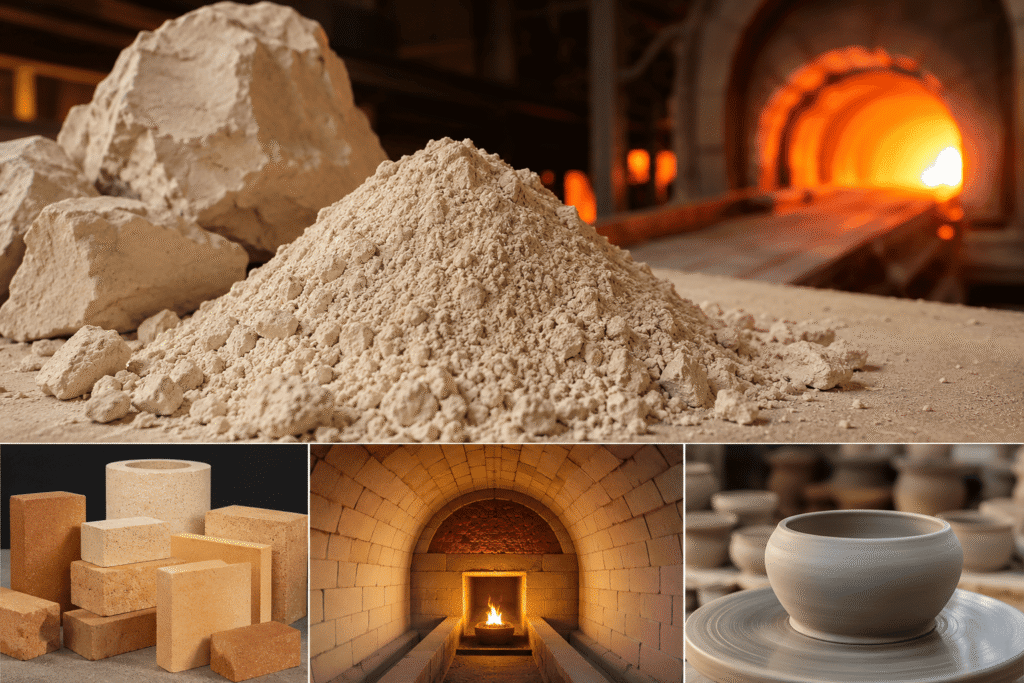
Refractory clay is a specially processed heat-resistant material widely used in industries that operate at extremely high temperatures. From steel plants and ceramic manufacturing to furnaces and kilns, refractory materials play a critical role in maintaining thermal stability and operational efficiency.
In simple terms, Refractory clay is a naturally occurring clay that can withstand high heat without melting, cracking, or losing its strength. Because of its thermal resistance and durability, it is considered an essential raw material for industrial insulation and lining applications.
What Is Refractory Clay Powder?
Refractory clay powder is the finely ground form of refractory clay used in manufacturing and construction processes where heat resistance is required. It typically contains alumina, silica, and other minerals that improve thermal performance and mechanical strength.
Industries use refractory clay powder to produce:
- Fire bricks
- Kiln linings
- Furnace insulation
- Ceramic products
- Foundry molds
- Boiler linings
The powder form allows manufacturers to mix and mold the material according to specific industrial requirements.
Key Properties of Refractory Clay
The popularity of refractory clay comes from its outstanding physical and chemical properties.
1. High Heat Resistance:
Refractory clay can tolerate extremely high temperatures, making it suitable for furnaces, kilns, and reactors.
2. Thermal Stability:
It maintains its structure and performance even after repeated heating and cooling cycles.
3. Chemical Resistance:
The material resists chemical corrosion caused by slag, ash, and industrial chemicals.
4. Mechanical Strength:
Refractory clay offers strong structural integrity under high-temperature conditions.
5. Low Thermal Conductivity:
It helps reduce heat loss and improves energy efficiency in industrial systems.
Refractory Clay Uses Across Industries
There are several important refractory clay uses across industrial sectors due to its excellent thermal properties.
Steel Industry: Used for lining blast furnaces, ladles, and steel-making equipment.
Cement Plants: Applied in rotary kilns and high-temperature processing chambers.
Ceramic Industry: Essential for manufacturing ceramic tiles, sanitaryware, and pottery products.
Glass Manufacturing: Used in furnace linings where consistent high temperatures are required.
Foundries: Helps create molds and cores for metal casting applications.
Power Plants: Used in boilers and thermal insulation systems to improve operational safety.
Because of these applications, demand for refractory clay powder continues to grow in industrial markets worldwide.
Benefits of Using Refractory Clay
Businesses prefer refractory clay because it delivers long-term operational and economic advantages.
Improved Heat Efficiency:
Refractory materials help retain heat inside furnaces and kilns, reducing energy consumption.
Longer Equipment Life:
High resistance to thermal shock and wear increases the lifespan of industrial equipment.
Reduced Maintenance Costs:
Durable refractory linings minimize downtime and repair expenses.
Better Industrial Safety:
Heat-resistant materials protect machinery and workers from extreme temperatures.
Cost-Effective Solution:
Compared to frequent equipment replacement, refractory systems offer significant long-term savings.
Factors Affecting Refractory Price
The refractory price can vary depending on several factors:
- Alumina and silica content
- Purity and particle size
- Temperature resistance level
- Packaging quantity
- Industrial-grade specifications
- Transportation and supply chain costs
Businesses should always choose quality-certified refractory materials to ensure performance and durability.
Refractory for Sale: Choosing the Right Supplier
When searching for Refractory for sale, it is important to select a trusted supplier that offers consistent quality and industrial-grade materials.
A reliable refractory supplier should provide:
- High-purity refractory clay powder
- Consistent particle sizing
- Industrial application support
- Bulk supply capability
- Quality testing certifications
For industrial applications requiring premium-grade refractory materials, explore the official product page of Refractory Clay Powder.
Conclusion
Refractory clay is one of the most important heat-resistant materials used in modern industries. Whether in steel plants, ceramic production, foundries, or cement manufacturing, refractory materials help improve thermal efficiency, durability, and industrial safety.
With increasing demand for high-performance industrial materials, refractory clay powder continues to be a valuable solution for businesses seeking reliable high-temperature performance. Choosing the right refractory supplier ensures better efficiency, lower maintenance costs, and long-lasting industrial operations. Contact us
Frequently Ask Questions
Refractory clay is mainly used in furnaces, kilns, boilers, foundries, and high-temperature industrial applications.
Refractory clay powder is the finely processed form of refractory clay used for making fire bricks, ceramic products, and industrial linings.
Its high alumina and silica content allows it to withstand extreme temperatures without breaking down.
Steel, cement, glass, ceramics, power generation, and foundry industries commonly use refractory materials.
Purity, alumina content, temperature resistance, particle size, and supply quantity influence refractory pricing.
Yes, refractory clay is widely used for furnace linings because of its excellent thermal stability.
You can purchase industrial-grade refractory materials from trusted manufacturers and suppliers specializing in heat-resistant products.
Refractory clay can withstand very high temperatures, while regular clay may crack or deform under extreme heat.
It minimizes heat loss in industrial equipment, helping reduce fuel and energy consumption.
Yes, refractory clay is commonly used in ceramic kilns and high-temperature ceramic production processes.