Silica sand and quartz sand are two terms that are often used interchangeably in industrial and commercial discussions. However, there are important differences between the two materials in terms of composition, processing, and industrial usage. Understanding these differences is important for manufacturers, procurement teams, and industrial buyers who rely on mineral raw materials for production processes.
Silica sand is widely used in industries such as construction, glass manufacturing, foundry applications, filtration systems, and ceramics. Quartz sand, on the other hand, refers more specifically to sand derived from quartz minerals. Although the materials are closely related, their classification and industrial applications can vary depending on purity levels and processing methods.
This guide explains the composition, properties, and industrial uses of silica sand and quartz sand, helping industrial buyers better understand how these materials are used across different industries.
What is Silica Sand
Silica sand is a naturally occurring granular material composed mainly of silicon dioxide (SiO₂). It is typically produced from weathered quartz-rich rocks and processed to achieve specific purity levels and particle sizes suitable for industrial applications.
Industrial silica sand is valued for its high silica content, durability, chemical stability, and consistent grain structure. Because of these characteristics, silica sand is widely used in manufacturing processes that require reliable mineral materials.
Silica sand is commonly used in industries such as:
• Glass manufacturing
• Construction materials
• Foundry and metal casting
• Water filtration systems
• Ceramics and refractory production
The material is often processed through washing, drying, and screening to meet industrial quality standards.
What is Quartz Sand
Quartz sand refers to sand that is primarily composed of quartz mineral particles. Quartz is a crystalline mineral made of silicon dioxide and is one of the most abundant minerals in the Earth’s crust.
When quartz rocks undergo natural weathering and erosion, they break down into smaller particles that form quartz sand deposits. These deposits can then be mined and processed for industrial use.
Quartz sand may contain varying levels of impurities depending on its geological source. Because of this, additional processing may be required to increase silica purity and improve performance for specific industrial applications.
Quartz sand is commonly used in industries such as:
• Glass manufacturing
• Construction materials
• Ceramics production
• Abrasive materials
• Industrial filtration systems
Composition Differences Between Silica Sand and Quartz Sand
Although silica sand and quartz sand are closely related, their classification often depends on silica purity and processing levels.
Silica Sand Composition
Silica sand typically contains a very high percentage of silicon dioxide. Industrial-grade silica sand is processed to remove impurities such as iron, clay, and other minerals.
Typical characteristics include:
• High silicon dioxide content
• Low impurity levels
• Controlled grain size distribution
• Processed for industrial applications
These properties make silica sand suitable for demanding industries such as glass manufacturing and foundry casting.
Quartz Sand Composition
Quartz sand consists mainly of quartz mineral particles but may contain additional natural impurities depending on the deposit source.
Typical characteristics include:
• Natural quartz mineral content
• Variable impurity levels
• Less processing compared to industrial silica sand
• Used in both industrial and construction applications
In many cases, quartz sand becomes silica sand after further purification and processing.
Physical and Chemical Properties
Both silica sand and quartz sand share similar chemical structures because they are primarily composed of silicon dioxide. However, their physical properties may differ slightly depending on purity and processing methods.
Common Properties
Both materials typically exhibit the following characteristics:
• High hardness and durability
• Chemical stability
• Resistance to weathering and corrosion
• High melting temperature
• Good thermal stability
These properties make silica and quartz sands valuable in industrial manufacturing processes.
Differences in Processing
The main difference lies in how the materials are processed for industrial use.
Silica sand used in manufacturing industries often undergoes:
• Washing
• Screening
• Classification
• Drying
• Impurity removal
Quartz sand may require similar processing steps when used for high-purity industrial applications.
Industrial Uses of Silica Sand
Silica sand is widely used across several industries because of its high purity and consistent particle size distribution.
Glass Manufacturing
One of the largest uses of silica sand is in glass production. Silica sand acts as the primary raw material for manufacturing different types of glass products.
Construction Industry
Silica sand is commonly used in construction materials such as concrete, mortar, and specialty building products. It helps improve strength and durability in construction applications.
Foundry and Metal Casting
Foundry industries use silica sand to create molds and cores for metal casting processes. Its high melting point and thermal stability make it suitable for this application.
Water Filtration Systems
Silica sand is widely used as a filtration medium in water treatment plants and filtration systems. Its granular structure helps remove impurities and particles from water.
Ceramics and Refractory Materials
Silica sand is also used in ceramic manufacturing and refractory products that require materials capable of withstanding high temperatures.
Industrial Uses of Quartz Sand
Quartz sand is used in many of the same industries as silica sand, particularly where high quartz content is beneficial.
Construction Materials
Quartz sand is commonly used as a component in construction aggregates and specialty building materials.
Ceramics Manufacturing
Ceramic manufacturers use quartz sand to improve the structure and strength of ceramic products.
Abrasive Materials
Due to its hardness, quartz sand is used in abrasive applications such as sandblasting and surface preparation.
Filtration Media
Quartz sand can also be used in filtration systems where appropriate grain size and mineral stability are required.
Silica Sand vs Quartz Sand: Key Differences
Although silica sand and quartz sand are closely related materials, several differences exist between them.
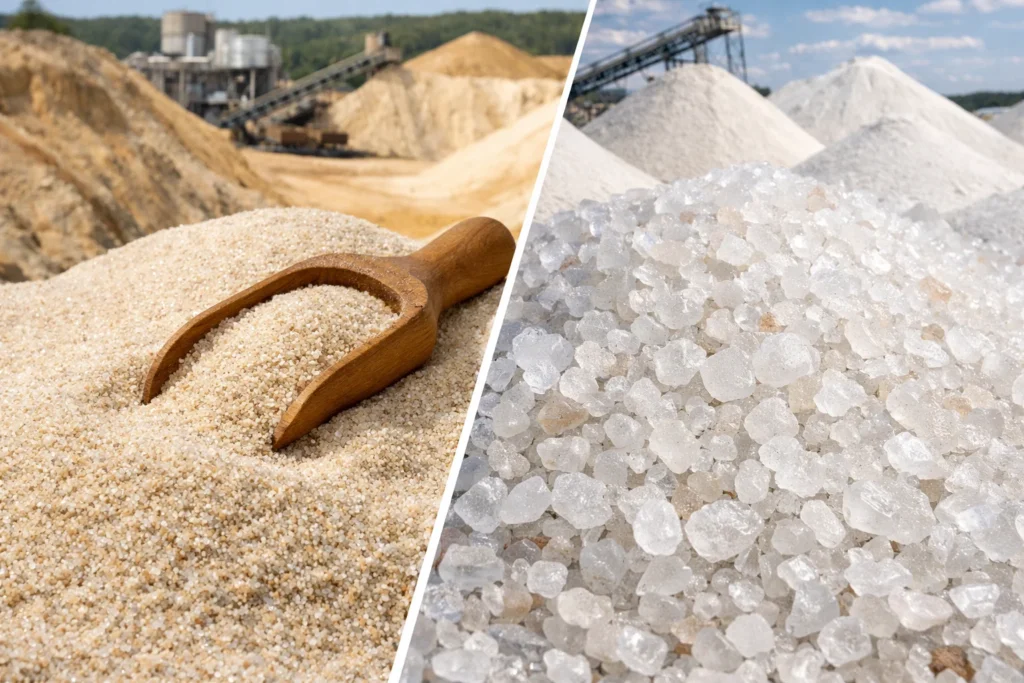
Silica sand generally refers to sand with high silicon dioxide content that has been processed for industrial applications. Quartz sand refers to sand derived from quartz minerals and may contain varying levels of impurities.
In many industrial situations, quartz sand becomes silica sand after purification and processing. Because of this relationship, the two materials are often discussed together in industrial mineral markets.
Understanding these distinctions helps manufacturers select the appropriate raw material for their production requirements.
Conclusion
Silica sand and quartz sand are closely related mineral materials widely used across multiple industries. Both materials are composed primarily of silicon dioxide and share similar physical and chemical characteristics.
The main difference lies in processing and purity levels. Silica sand is typically processed to achieve high purity and consistent particle size for demanding industrial applications. Quartz sand refers more broadly to sand composed of quartz mineral particles.
For industries such as glass manufacturing, construction, foundry operations, and water filtration systems, these materials play an essential role in modern production processes. Understanding their composition and industrial uses helps manufacturers choose the most suitable material for their applications.
Frequently Ask Questions
Silica sand refers to sand with high silicon dioxide content that has been processed for industrial applications, while quartz sand refers to sand derived from quartz minerals that may contain natural impurities.
Quartz sand and silica sand are closely related, but silica sand usually refers to processed sand with higher purity levels used for industrial applications.
Silica sand has a high silicon dioxide content and consistent particle structure, which makes it ideal for producing different types of glass products.
Industries such as glass manufacturing, construction, metal casting, water filtration, and ceramics use silica sand as an important raw material.
Yes. Quartz sand can be processed through washing and purification to increase silica content and meet industrial quality requirements.