
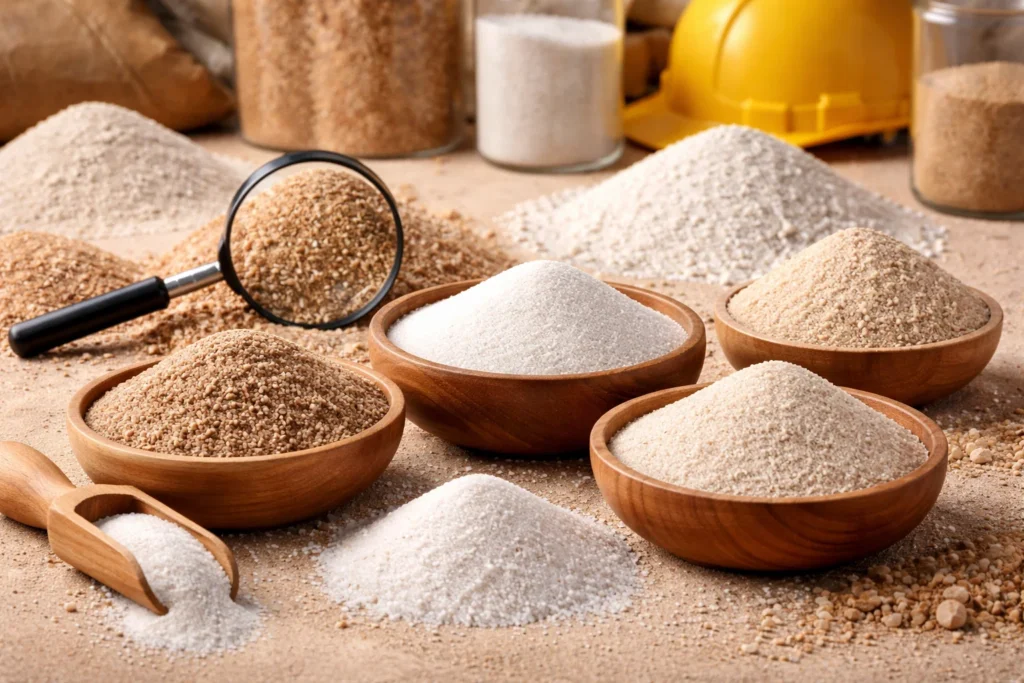
Silica sand is one of the most important industrial minerals used in manufacturing and construction processes. It is primarily composed of silicon dioxide and is valued for its hardness, chemical stability, and resistance to high temperatures. Because of these characteristics, silica sand plays a crucial role in industries such as glass manufacturing, metal casting, construction materials, water filtration, and energy production.
However, not all silica sand is the same. Different industrial applications require specific grades and types of silica sand depending on particle size, purity level, and chemical composition. Understanding the different types of silica sand helps manufacturers select the appropriate material for their production processes.
This article explains the major types of silica sand and their industrial applications across various industries.
What Determines the Type of Silica Sand
The classification of silica sand depends on several physical and chemical factors. These characteristics determine whether the sand is suitable for particular industrial uses.
Important factors that influence the type of silica sand include:
• Particle size distribution
• Silica purity level
• Grain shape and texture
• Chemical composition
• Processing and washing methods
These properties affect how silica sand performs in manufacturing processes and industrial applications.
Major Types of Silica Sand
Several types of silica sand are produced and processed to meet the requirements of different industries. Each type is designed to provide specific performance characteristics for manufacturing and industrial operations.
Glass Grade Silica Sand
Glass grade silica sand is one of the highest purity forms of silica sand used in industrial manufacturing. This type of silica sand contains very high levels of silicon dioxide and minimal impurities such as iron or aluminum.
Glass manufacturers use this material because it produces clear and durable glass products. The purity and consistency of the sand help maintain the quality and transparency required in glass production.
Glass grade silica sand is commonly used in:
• Flat glass manufacturing
• Container glass production
• Specialty glass products
Foundry Silica Sand
Foundry silica sand is used in the metal casting industry. It serves as a molding material for producing metal components and machinery parts.
This type of silica sand is valued for its ability to withstand high temperatures without breaking down during the metal casting process.
Foundry silica sand provides several advantages in casting operations, including:
• Thermal stability during molten metal pouring
• Strong mold structure
• Consistent casting results
Industries such as automotive manufacturing and heavy equipment production rely on foundry silica sand for producing metal components.
Construction Silica Sand
Construction silica sand is widely used in building materials and infrastructure projects. This type of sand is commonly mixed with cement, concrete, and other construction materials.
Construction silica sand contributes to the strength and durability of building products. It also improves the structural stability of construction materials used in residential and commercial projects.
Common construction uses include:
• Concrete production
• Mortar and cement mixtures
• Building blocks and structural materials
Filter Silica Sand
Filter silica sand is specifically processed for water filtration and purification systems. It is used in filtration units that remove suspended particles and impurities from water.
The sand particles are carefully graded to allow efficient water flow while capturing unwanted contaminants.
Filter silica sand is commonly used in:
• Drinking water filtration systems
• Wastewater treatment plants
• Swimming pool filtration systems
Its durability and chemical resistance make it an effective filtration material for water treatment processes.
Frac Silica Sand
Frac silica sand is used in the energy industry, particularly in hydraulic fracturing operations. This type of silica sand is selected for its high strength and ability to maintain open fractures in underground rock formations.
During hydraulic fracturing, silica sand is injected into wells along with fluid to keep fractures open and allow oil or natural gas to flow more easily.
Frac silica sand must meet strict specifications related to:
• Grain size distribution
• Crushing resistance
• Sphericity and roundness
These characteristics help maintain efficiency during energy extraction operations.
Industrial Uses of Different Types of Silica Sand
Silica sand is used in a wide variety of industries because of its durability, chemical stability, and ability to withstand high temperatures.
Major industries that use different types of silica sand include:
• Glass manufacturing industry
• Metal casting and foundry industry
• Construction and infrastructure development
• Water filtration and treatment industry
• Energy production and hydraulic fracturing
Each industry requires specific grades and types of silica sand to meet performance standards and manufacturing requirements.
Importance of Choosing the Right Type of Silica Sand
Selecting the correct type of silica sand is essential for maintaining efficiency and product quality in industrial production.
Manufacturers typically evaluate silica sand based on:
• Silica purity levels
• Particle size distribution
• Mineral composition
• Processing quality
Choosing the appropriate silica sand ensures reliable performance and consistent results across different industrial applications.
Conclusion
Silica sand is a versatile industrial mineral that supports many manufacturing and production processes. Because different industries require specific performance characteristics, several types of silica sand are produced and processed to meet these needs.
From glass manufacturing and metal casting to construction materials and water filtration systems, silica sand continues to play an important role in modern industrial development.
Understanding the different types of silica sand and their industrial applications allows manufacturers to select the most suitable material for their production processes and ensure high-quality results
Frequently Ask Questions
The main types of silica sand include glass grade silica sand, foundry silica sand, construction silica sand, filter silica sand, and frac silica sand.
Silica sand is used in industries such as glass manufacturing, metal casting, construction materials, water filtration, and energy production.
High purity silica sand is required in glass manufacturing because it helps produce clear, durable, and chemically stable glass products.
Filter silica sand is used in water filtration systems because its particle size allows efficient removal of impurities from water.
Industries choose silica sand based on factors such as silica purity, grain size, mineral composition, and suitability for specific industrial applications.