
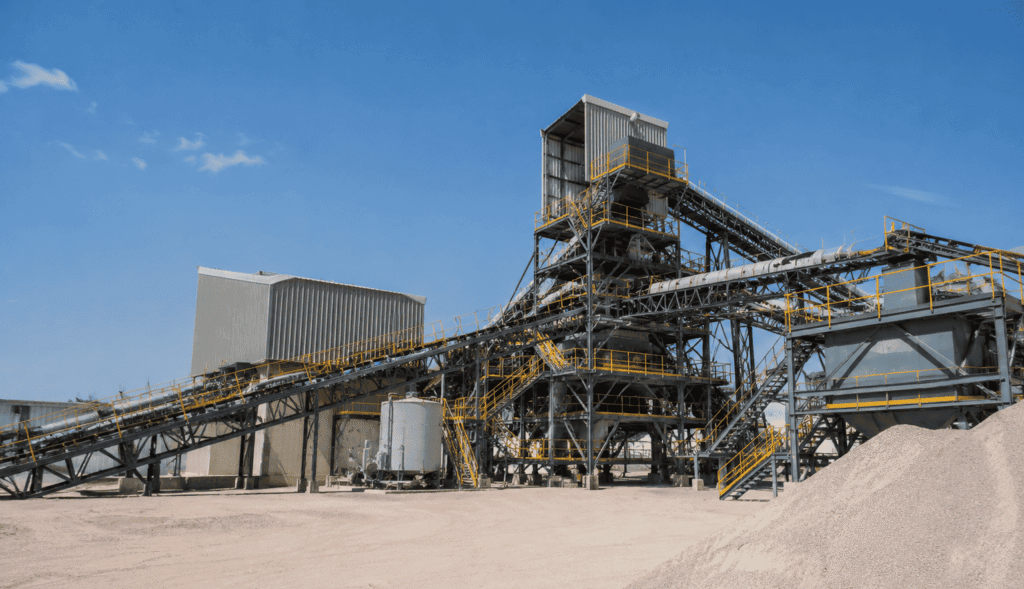
Puresil India has launched India’s premier fully integrated vertical plant for processing high-purity silica sand and kaolin.
India’s industrial minerals sector is entering a new phase of transformation, driven by innovation, advanced processing technologies, and rising global demand for high-quality raw materials. The recent commissioning of a modern silica sand processing facility by Puresil India represents an important milestone for the country’s glass and mineral industries.
Silica sand serves as one of the most critical raw materials in numerous sectors, including glass manufacturing, ceramics, foundry applications, solar energy, construction, and specialty industrial products. As industries demand greater consistency, purity, and performance, the need for technologically advanced processing solutions has become increasingly important.
Modern processing plants are designed to go beyond simple extraction. They utilize sophisticated washing, classification, magnetic separation, and grading technologies to produce high-purity silica sand suitable for demanding industrial applications. These advancements help manufacturers achieve better product quality, improved production efficiency, and reduced material waste.
The Role of Processed Silica Sand in Glass Manufacturing
For the glass industry, the quality of silica sand directly influences transparency, strength, durability, and overall manufacturing performance. High-purity silica with controlled particle size distribution enables glass manufacturers to reduce defects, optimize furnace efficiency, and produce superior finished products. This is particularly important for sectors such as solar glass, architectural glass, container glass, and specialty glass manufacturing.
India’s growing manufacturing ecosystem is also fueling increased demand for processed industrial minerals. Government initiatives supporting domestic manufacturing, infrastructure development, and renewable energy projects are accelerating the need for reliable raw material supply chains. Advanced silica sand processing capabilities position Indian manufacturers to better serve both domestic and international markets.
Another significant advantage of next-generation processing facilities is their focus on sustainability. Modern plants increasingly incorporate water recycling systems, energy-efficient technologies, and environmentally responsible processing methods. Sustainable mineral processing not only reduces environmental impact but also supports long-term resource availability and operational efficiency.
As global industries continue to prioritize quality, traceability, and supply chain resilience, investments in advanced mineral processing infrastructure are expected to play a crucial role in strengthening India’s position as a leading supplier of industrial minerals.
The establishment of technologically advanced silica sand processing facilities demonstrates how innovation is reshaping traditional industries. By embracing modern processing techniques, India is building a stronger foundation for future growth across glass manufacturing, renewable energy, ceramics, and other high-value industrial sectors.
Frequently Ask Questions
High-purity silica sand improves glass clarity, strength, durability, and manufacturing efficiency while reducing defects during production.
Processed silica sand is widely used in glass manufacturing, ceramics, foundries, solar panel production, construction materials, and specialty industrial applications.
Advanced facilities use washing, magnetic separation, screening, and grading technologies to remove impurities and maintain consistent particle size and chemical composition.
Modern plants often feature water recycling, energy-efficient systems, reduced waste generation, and environmentally responsible processing practices.
It strengthens domestic manufacturing, enhances export competitiveness, supports industrial growth, and creates opportunities across multiple sectors.
High-quality silica sand typically features high silica content, low impurity levels, consistent grain size, and excellent chemical stability, making it suitable for demanding industrial applications.
Silica sand processing uses techniques such as washing, screening, magnetic separation, and classification to eliminate contaminants like iron, clay, and other unwanted minerals.
Uniform particle size ensures better melting performance, improved product quality, reduced manufacturing defects, and enhanced efficiency in industrial processes such as glass production.
Yes. High-purity silica sand is a crucial raw material in the manufacturing of solar glass and photovoltaic panels, supporting the growth of renewable energy technologies.
The future of India's silica sand industry looks promising due to increasing demand from glass, solar energy, construction, and manufacturing sectors, along with ongoing investments in advanced processing technologies.